Death by Cardigan

When a crisis message gets asked to dress business casual.
Somewhere between Thursday approval and Monday morning, a perfectly clear crisis message gets asked to put on a cardigan. Not a full rewrite. Nothing dramatic. Just something a little softer. A little less sharp. A little more . . . business casual.
If you’ve spent any time in corporate communications, you already know the sentence that starts the process. It usually arrives in a Monday morning email. It often follows a compliment. And it goes something like: “Can we soften this a little?” On the surface it sounds reasonable. Adjust the tone. Smooth the edges. Make it land a little easier. But experienced communicators eventually learn something important: “Soften” rarely means soften. It means remove.
Remove the sentence that makes the issue clear. Remove the line that implies accountability. Remove the part that might produce a reaction. Soften makes it sound like a small adjustment. In practice, it’s closer to removing the melody and hoping the audience still hears the song. And the messages that get softened the most are usually the ones that matter the most. Crisis updates. Organizational changes. Policy decisions. Moments where clarity isn’t optional. It’s the whole job.

The Softening Cycle
The pattern is familiar. A communicator writes a clear message. It explains what happened, what it means, and what comes next. It gets reviewed. It gets approved. Everyone agrees it works. Then someone sleeps on it. Maybe they reread it over the weekend. Maybe a senior leader asks a question that plants doubt. Maybe Thursday courage turns into Monday caution. So the message comes back for one small tweak. Then another. A sentence gets reshaped. A paragraph gets moved. Someone suggests “leading with something more positive.”
By the fifth pass, the message that was clear enough to understand and direct enough to act on has been dressed down into something business casual. Polite. Inoffensive. Perfectly acceptable. And completely forgettable. Twelve smart people approve it. None of them can explain what it actually says now.
What Softening Looks Like
A familiar pattern that appears whenever organizations make a major change but communicate it in language designed to avoid a reaction.
In 2025, Target announced the end of several internal initiatives that had previously been presented as long-term commitments. The decision itself wasn’t the communications lesson. The language was. The shift was described as part of “staying in step with the evolving external landscape.” It’s the kind of phrase corporate communicators recognize instantly.
It signals that something significant has changed without explaining what changed, why it changed, or what the organization actually believes about it.
And when audiences encounter language that vague, they do what audiences always do. They fill in the blanks themselves. Usually with assumptions far less generous than the truth.
What Softening Really Costs
Communicators often frame this as a writing issue. The language got weaker. The message got muddy. But the real cost is behavioral.
Clear messages produce action. Softened messages produce confusion. When audiences receive a message that feels vague, they rarely assume the situation is simple. They assume something is being hidden. And once people start filling in the gaps themselves, the organization loses control of the narrative. The irony is that softening is meant to reduce reaction. But unclear communication almost always produces more reaction, not less. In the case of Target, the softened language didn’t prevent backlash. It widened it — because every audience heard something different, and none of them heard clarity.
Now Add AI
Here’s where the story gets more interesting.
Generative AI is extremely good at softening messages. Ask it to make something gentler, more empathetic, or less direct and it will do it instantly.
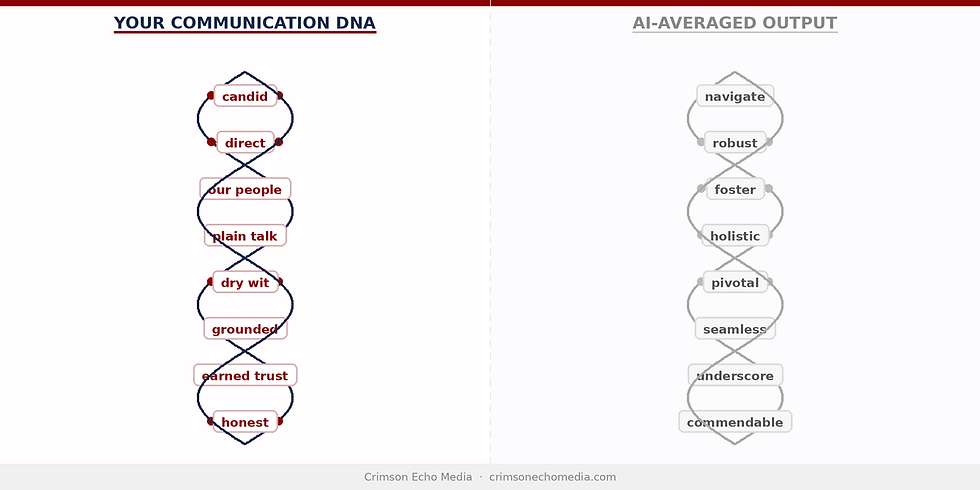
It will smooth the edges. Add warmth. Reduce friction. It will also quietly remove the parts that made the message clear. That’s not a flaw. It’s exactly what the technology is designed to do. Language models optimize for pleasant, fluent text.
But organizational communication isn’t optimized for pleasantness. It’s optimized for clarity and action. Before AI, the softening cycle took days. Review rounds. Emails. Meetings.
Now it can happen in seconds with just one prompt: “Make this softer.” Which means the communicator’s role is shifting. Not toward writing prettier sentences. Toward protecting the clarity inside them.
The Real Request
The next time someone asks you to soften a message, listen for the request underneath. They’re rarely asking for different words. They’re asking for less exposure. Less discomfort. Less risk.
That’s not a writing problem. That’s a leadership conversation. And the communicator who can gently surface that conversation earns the seat at the table. Not by refusing the request. But by asking: “What reaction are we trying to avoid?”
That’s the work. It always has been. AI just made it faster. Which means the communicator’s judgment has to move faster too. The message doesn’t need a softer outfit. It needs someone willing to let it walk into the room as it is.


Comments